An OHLC candle records open, high, low and close over an interval. It compresses a price range; it is not a complete event log.
Identical candle, different order
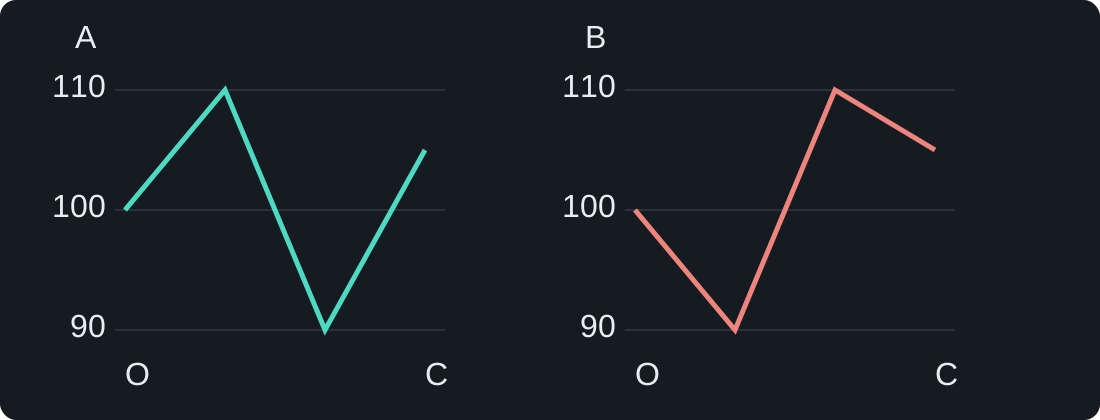
With O=100, H=110, L=90 and C=105, both 100 → 110 → 90 → 105 and 100 → 90 → 110 → 105 are possible. The candle is identical, but the extreme prices occur in opposite order.
If stop and target lie inside that range, those four values cannot establish which came first. Smaller bars reduce ambiguity; complete ordering requires timestamped transactions or quotations.
Know the price source
Candles can use trades, bid, ask or mid-quotes. Providers differ in sessions, time zones, filtering and aggregation. Specify the series before comparison. A mid-quote high is not necessarily an executable buy or sell price.
Different meanings of volume
Traded volume measures executed units—shares, contracts or asset quantity—and sometimes monetary turnover. State the units.
Tick volume commonly counts price updates in a provider’s stream. It is not total market turnover or unique participant count. OANDA’s candle documentation defines volume as the number of prices created during the interval.
These measures are not interchangeable. Even one venue’s traded volume may not cover a fragmented market.
Orders are not transactions
An order book shows displayed orders that may change or be cancelled. A tape shows completed trades. An order’s presence does not prove execution, and cancellation does not establish manipulative intent.
Candles cannot reconstruct the full queue, hidden liquidity or participant identity. See CME Group’s liquidity measures.
Distinguish observed prices and volumes from stories about a large participant. This matters for both SMC and Wyckoff analysis.