LPSY (Last Point of Supply) is a weak recovery area following weakness in an inferred distribution process. Limited upward progress may reflect weak demand, substantial supply or both.
Not every high is LPSY
The event belongs to a sequence: weakness first, then attempted recovery. Compare its range, activity and achieved level with the preceding decline.
Low rally volume alone does not prove a specific seller’s presence. It is one observation considered alongside price result.
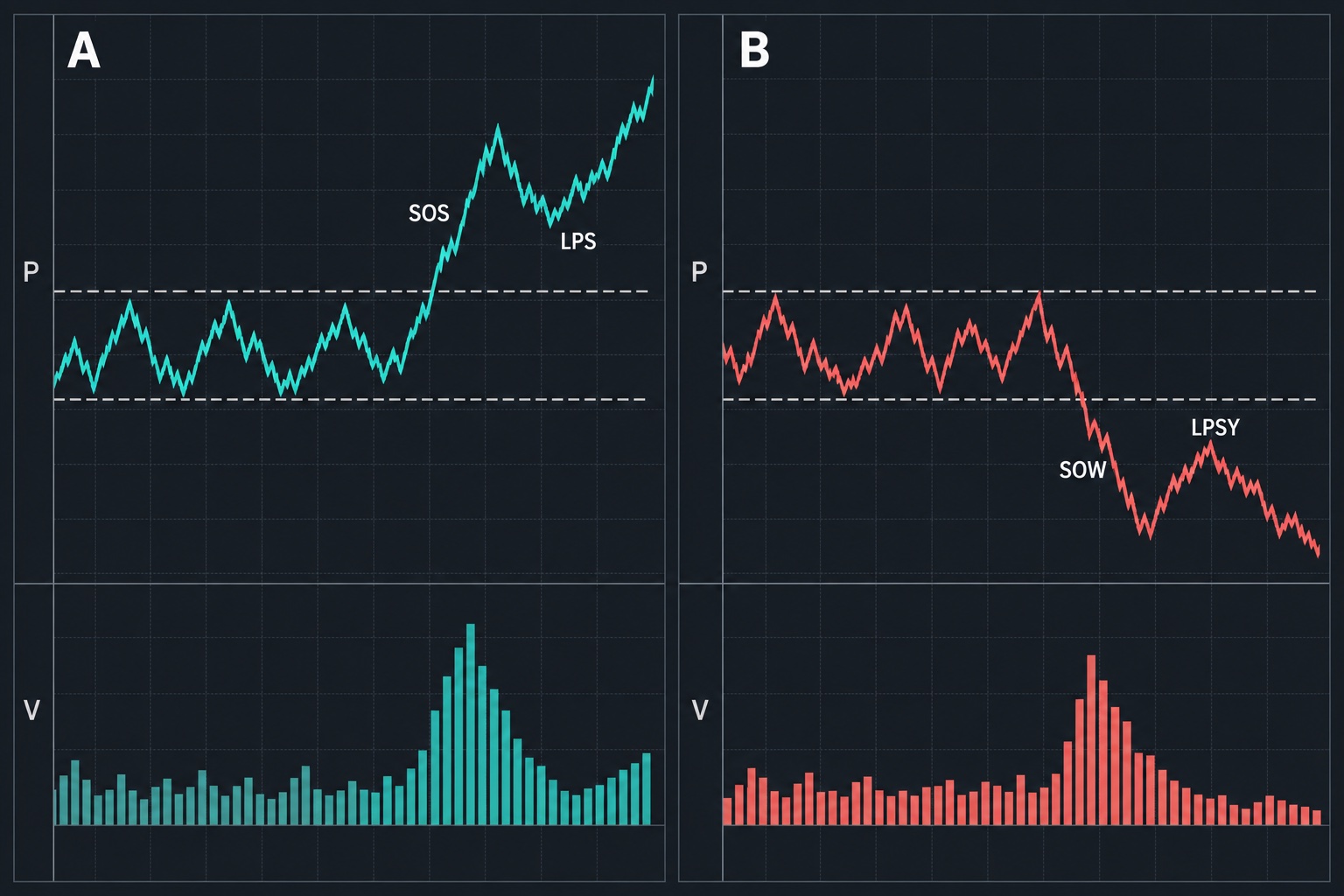
Hypothetical example
Price exits a 100–110 range to 96. A rebound reaches only 100, with narrower bars and less activity than the decline. This is an LPSY candidate in SOW context.
Former support may be tested as resistance. Exact contact is not universally mandatory: a weak recovery can stop elsewhere.
Counterexample
A recovery to 110 followed by holding above resistance requires revising the hypothesis. Calling every rebound “last” assumes the decline beforehand.
Several weak recoveries may be described as LPSYs. The term does not promise that price can never revisit an area.
Record the context
Specify the range, observed weakness, recovery depth and volume source. Distinguish distribution interpretation from observed levels. State when the assessment is retrospective.
See Bruce Fraser’s Distribution Definitions. Compare LPS. The label is not a standalone recommendation to sell short.