An upthrust (UT) moves above range resistance and returns inside. UTAD (Upthrust After Distribution) names a late such event within an interpretation of developing distribution. Not every UT is UTAD.
Geometry and process stage
In a hypothetical 100–110 range, price reaches 112 and returns to 108. The penetration and return are observable. Calling it UTAD also requires range context and grounds for identifying a late demand test.
One candle above 110 and back cannot prove completed distribution.
After the return
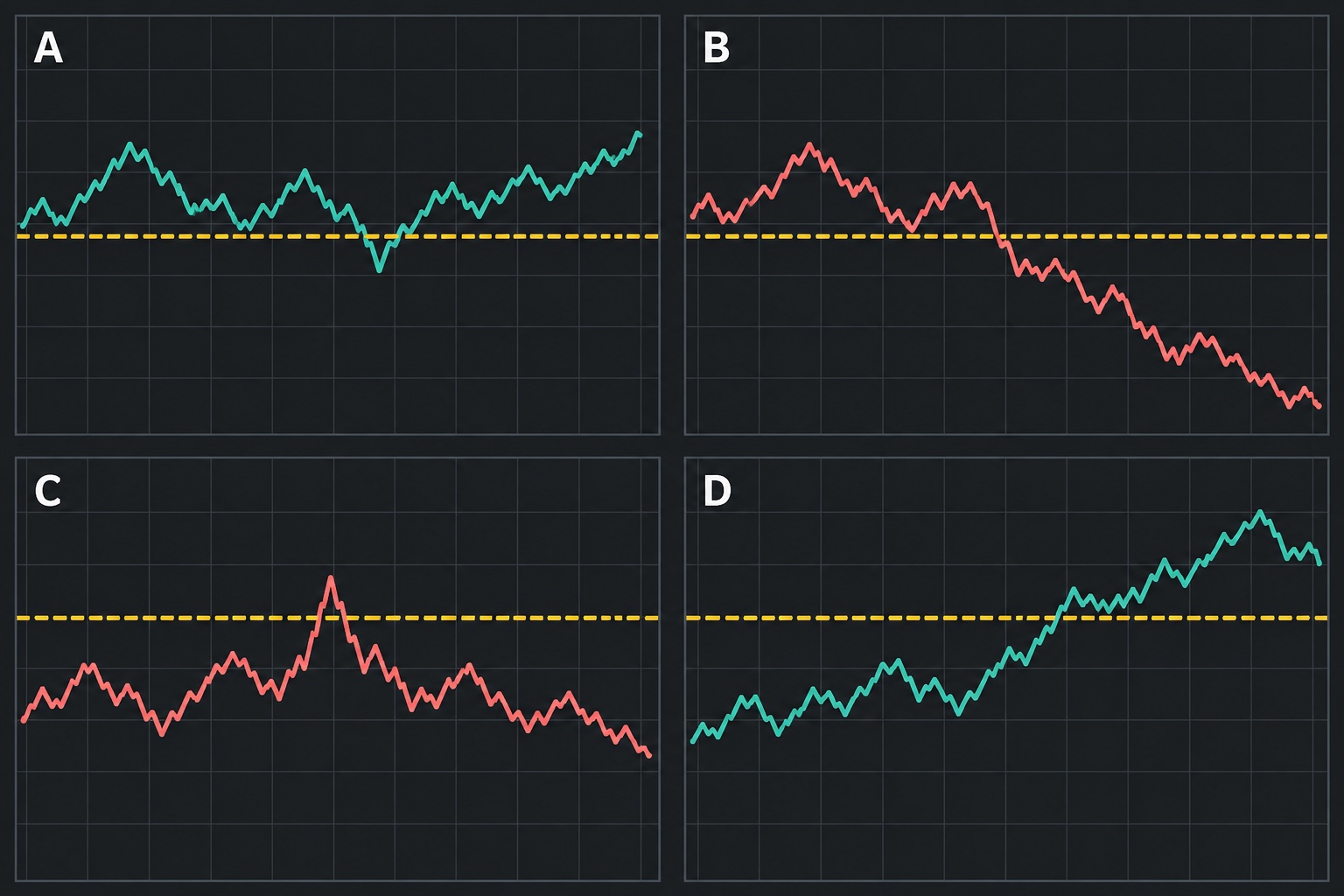
Compare renewed upward progress, movement ranges and activity on the subsequent decline. Weaker advances and SOW fit a distribution hypothesis, but do not make a decline inevitable.
Duration depends on scale. The educational distinction is return inside the chosen range, not one universal time limit.
Counterexample: holding above resistance
If price reaches 112, stays above 110 and advances, the required return is absent. Crossing the level alone is not a UT.
If a return did occur but a later move holds above resistance, revise the broader distribution interpretation. The earlier return remains an observed fact; its meaning changes.
Avoid unsupported claims
A wick above a high does not prove a deliberate trap, manipulation or sales by a specific institution. Distribution can also develop without UTAD or a new high.
See Bruce Fraser’s definitions. Next: SOW and LPSY.