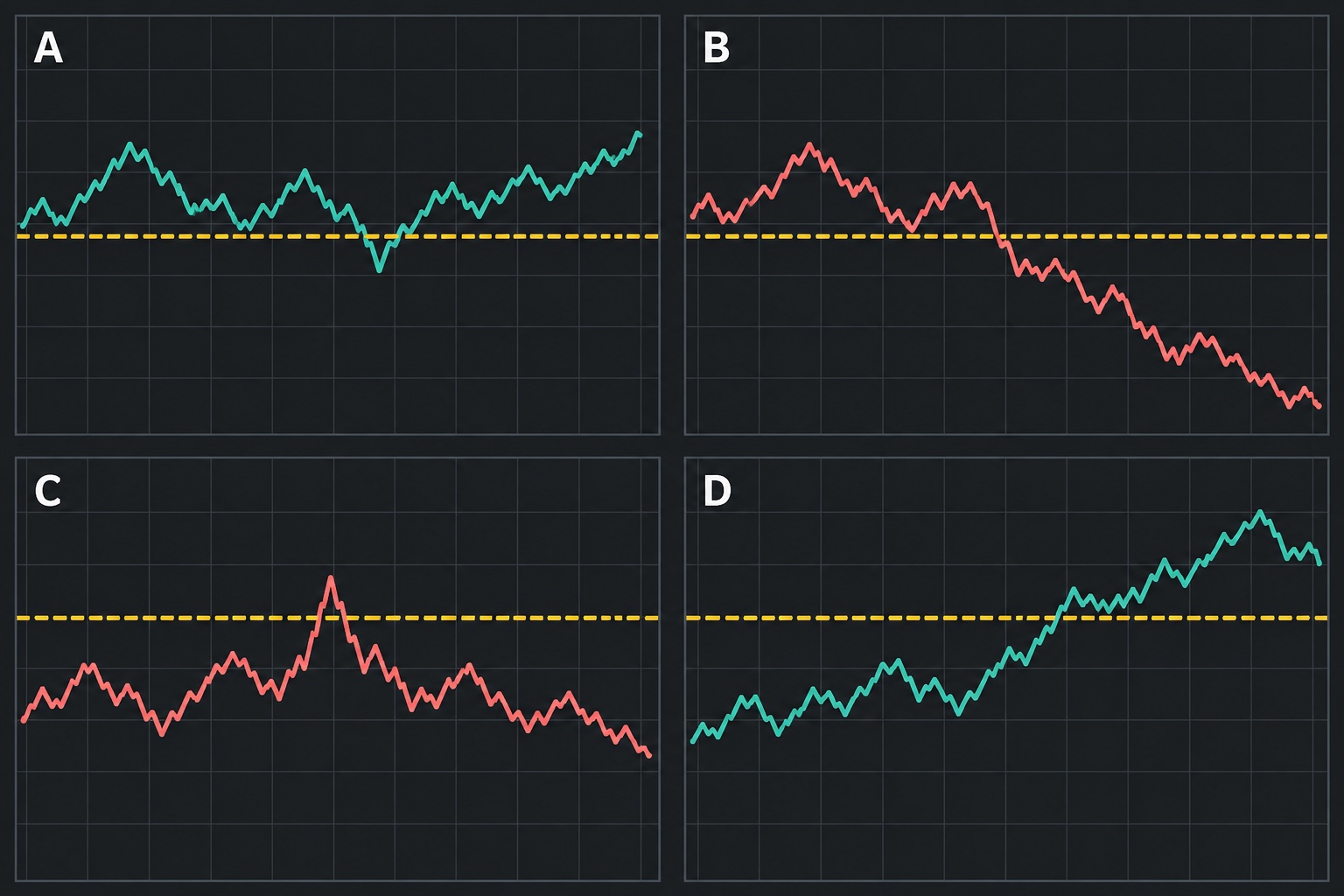
A spring moves below previously defined range support and then returns inside. In inferred accumulation it is considered a possible test of supply.
Define the boundary first
If support is selected after the move to manufacture a spring, the exercise selects a convenient line rather than testing a hypothesis.
In a hypothetical 100–110 range, price reaches 98 and closes at 102. Penetration and return are observable. A story about who triggered stops does not follow from those numbers.
What a later test adds
A return toward the low area with less downward progress and more subdued activity may be compatible with diminished supply. Volume comparison requires a consistent source and comparable conditions.
A high-volume spring cannot be judged by volume alone: subsequent response and tests matter. No universal penetration percentage or bar count guarantees a successful interpretation.
Counterexample
If price reaches 98 but does not return, instead holding below 100 and continuing down, the penetration alone is insufficient for a spring. Even after an initial return, sustained renewed weakness can contradict the broader accumulation hypothesis.
A long lower wick alone also lacks context: define the range, prior movement and event sequence.
Spring versus sweep
An SMC liquidity sweep is commonly framed around selected extrema. A spring belongs to Wyckoff range and supply analysis. Geometry can overlap without identical definitions.
Accumulation can develop without a spring. See ChartSchool. Continue with SOS; no event promises profitability.